
HB 3143 Set to Extend Oklahoma’s Medical Marijuana Licensing Moratorium

HB 3143 has passed the legislature and was sent to the Governor's desk April 29th, 2026. If signed into law, the bill will extend the existing licensing moratorium and prohibit the transfer of licenses pending any administrative action.
The Moratorium Gets Two More Years
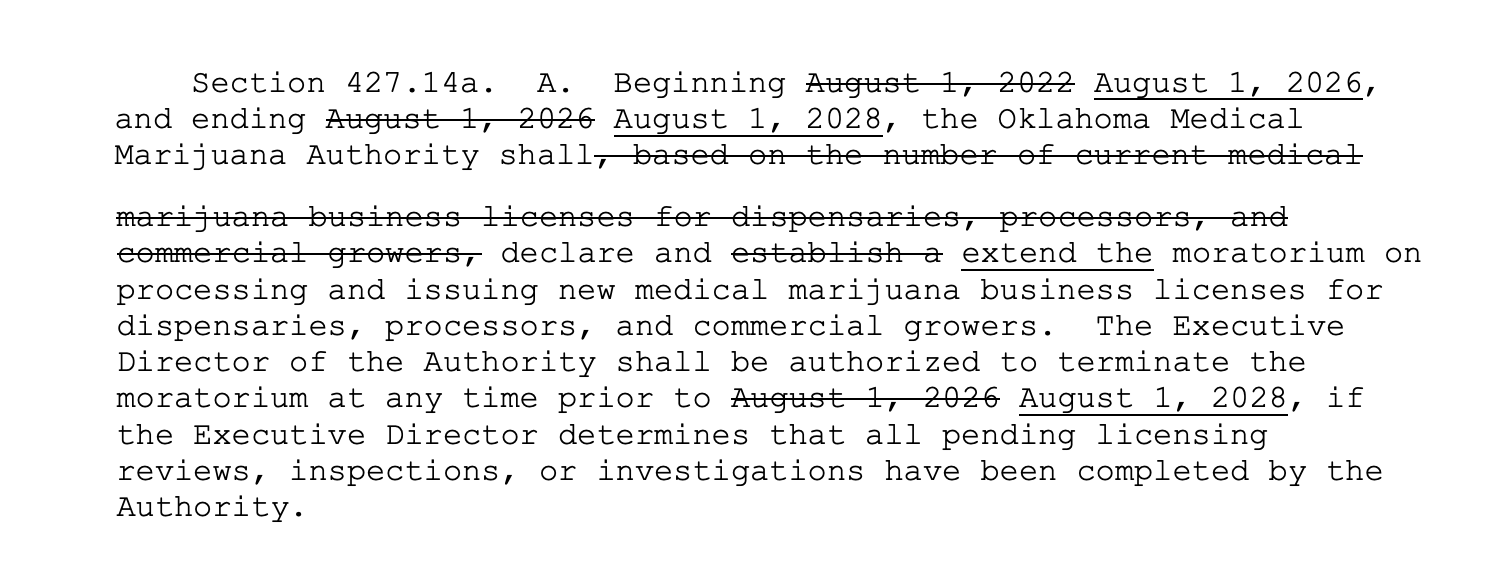
The existing moratorium on new cannabis grow, dispensary, and processor licenses, currently set to expire this August, would be extended to August 1, 2028 under HB 3143. Anyone who was anticipating the reopening of the state licensing market this summer will have to wait at least another two years.
That said, the extension includes the same relief valve as the original moratorium: OMMA's Executive Director retains the authority to terminate the freeze early if the agency determines that its backlog of licensing reviews, inspections, and investigations has been completed. Whether that happens before the 2028 deadline remains to be seen, but it is worth monitoring.
Another bill worth monitoring that may play into the eventual end of the moratorium is HB 3144, which restricts the total number of medical marijuana commercial grower licenses the Oklahoma Medical Marijuana Authority (OMMA) may approve to no more than 2,550 licenses beginning on November 1, 2026. Currently active grow licenses are below that threshold, at 2,136 according to OMMA’s most recent licensing and tax data report.
License Transfers With Pending Action Are Now Prohibited
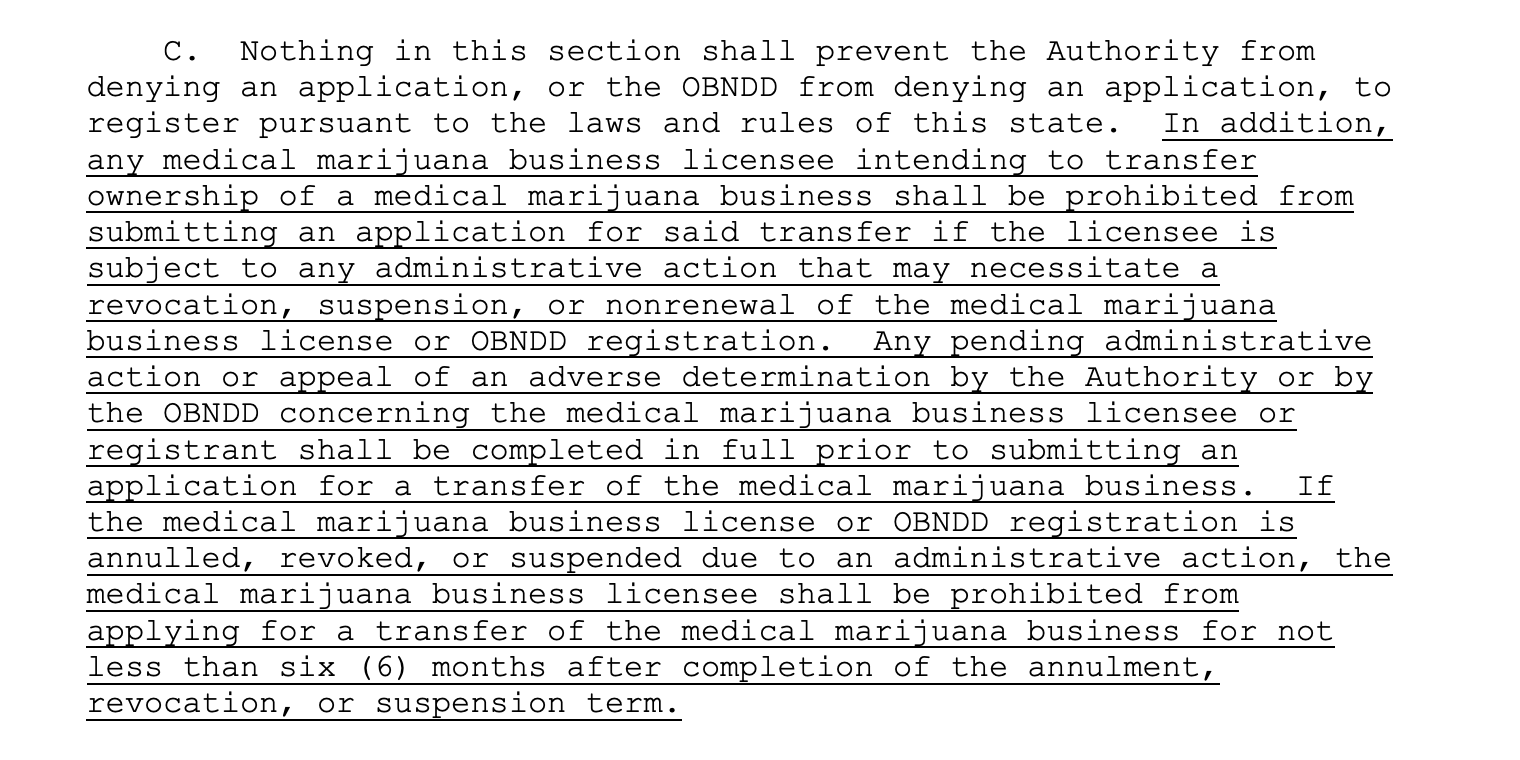
Perhaps the more immediately impactful provision of HB 3143 is the formal prohibition on license transfers when there is pending administrative action on the license. This includes any action that could result in a revocation, suspension, or non-renewal of the license or OBNDD registration.
Under the bill, any pending administrative action or appeal must be fully resolved before a transfer application can be submitted. And if a license is ultimately annulled, revoked, or suspended, the licensee would be barred from applying to transfer the business for a minimum of six months following the completion of that action.
This is not entirely new territory in practice. Due to the nature of how OMMA processes applications, we have long advised clients that license transfers cannot occur while there is pending action on the license. But there is a meaningful difference between practical guidance and the law. HB 3143 closes that gap.
What This Means for Buyers and Sellers
The stakes are now higher than ever for anyone involved in cannabis license transactions. As a buyer, a failed transfer can mean the complete loss of your investment with no avenue for recovery. As a seller, a denial could lock you out of transferring the business for six months or more, destroying any exit timeline you were counting on. That reality demands a more rigorous approach to due diligence on both sides of the transaction.
Before any deal closes, buyers and sellers should ensure a thorough review of the license's current status, history, and any open or pending matters with OMMA or OBNDD. Purchase and sale agreements should also include robust representations, warranties, and guarantees that account for the risk of denial. Without those protections in place, buyers have little recourse if a transfer is rejected.
The Takeaway
HB 3143 is a reminder that Oklahoma's cannabis regulatory environment continues to evolve, and that the consequences of moving too fast or without proper counsel can be severe. Whether you are navigating the moratorium extension or preparing for a license transaction, having the right legal support to carry you through it is critical.
If you have questions about how HB 3143 affects your business or planned transactions, or transfers contact us at Gies Law Firm today.
