
From Farm Bill to Federal Ban: Navigating the 2026 Hemp Product Restrictions
June 8, 2026
On November 12, 2025, President Trump signed the Continuing Appropriations, Agriculture, Legislative Branch, Military Construction and Veterans Affairs, and Extensions Act, 2026 (H.R. 5371 / P.L. 119-37) into law.
Embedded within it are amendments that fundamentally redefine "hemp" under federal law and close the regulatory gap that has permitted delta-8, delta-10, THCA, HHC, THC-O, and similar products to be marketed as legal hemp since the 2018 Farm Bill. The new provisions take effect November 12, 2026.
Core Legal Change
The 2018 Farm Bill framework focused primarily on delta-9 THC. The new federal standard moves toward total THC and intoxicating cannabinoid restrictions. In practical terms, products that relied on alternative cannabinoids such as delta-8 THC, delta-10 THC, HHC, THC-O, THC-P, or converted cannabinoids, as well as THCA, to deliver psychoactive effects will no longer be able to avoid federal marijuana/controlled-substance treatment merely because the product is labeled as “hemp.”
0.4mg Limit
The most significant change for finished consumer products is the new 0.4 milligram limit. The immediate container presented to the consumer (such as a jar, bottle, can, blister pack, vape, tincture bottle, or edible package) may not contain more than 0.4 milligrams of total THC/intoxicating cannabinoids in the aggregate.
That limit is extremely low compared to current market products. Many hemp-derived gummies, beverages, vapes, tinctures, and edibles contain multiple milligrams of THC or intoxicating cannabinoids per serving, and often far more per container. As a result, most existing intoxicating hemp products will need to be reformulated or removed from lawful hemp channels before the effective date.
Product impact
Intoxicating gummies, edibles, and capsules. Most hemp-derived THC gummies, edibles, and similar products currently on the market contain multiple milligrams of THC or intoxicating cannabinoids per serving and will generally exceed the new 0.4 milligram per-container limit unless reformulated to near-trace levels.
Delta-8 THC, Delta-10 THC, and similar converted cannabinoids. In addition to the new potency restrictions, ODAFF has indicated that cannabinoids that are synthesized, manufactured outside the plant, or otherwise fall outside the amended federal definition may no longer qualify as hemp. Products containing delta-8 THC, delta-10 THC, and similar converted cannabinoids should be carefully reviewed for compliance.
THCA products and flower. The amended federal definition continues to rely on Total THC calculations, which include both measured THC and a portion of THCA using a post-decarboxylation conversion formula. Because THCA is counted toward Total THC, many THCA flower and other THCA products currently marketed as hemp may no longer satisfy the amended federal definition.
Beverages, tinctures, oils, vapes, and other consumable products. Because the new limit applies to the finished retail container rather than individual servings, many beverages, tinctures, vape products, oils, and similar cannabinoid products are likely to exceed the allowable threshold without significant reformulation.
CBD products. CBD isolate products may remain viable if they contain no more than trace amounts of THC or other intoxicating cannabinoids. However, full-spectrum and certain broad-spectrum CBD products should be reviewed carefully because THC content is measured at the finished-product level.
Topical products. Creams, balms, patches, and other topical products may require additional regulatory guidance. Their treatment under the amended hemp definition will likely depend on cannabinoid content, formulation, intended use, and future agency interpretation.
What Survives?
CBD Products Non-intoxicating CBD and industrial hemp products generally remain lawful, though the amendments may affect certain CBD products that contain measurable amounts of THC or other intoxicating cannabinoids.
Pure CBD itself is not prohibited by the 2026 amendments. CBD isolate products containing no more than trace amounts of THC or other intoxicating cannabinoids may continue to qualify as lawful hemp products if they otherwise satisfy applicable federal and state requirements. However, many full-spectrum and some broad-spectrum CBD products contain measurable amounts of THC that accumulate across the finished package. Because the new law applies strict limits to total THC and intoxicating cannabinoids in the immediate consumer container, manufacturers and retailers should carefully review certificates of analysis, formulations, and finished-product testing. Products marketed primarily as CBD may still become non-compliant if they exceed the new federal thresholds.
Industrial Hemp
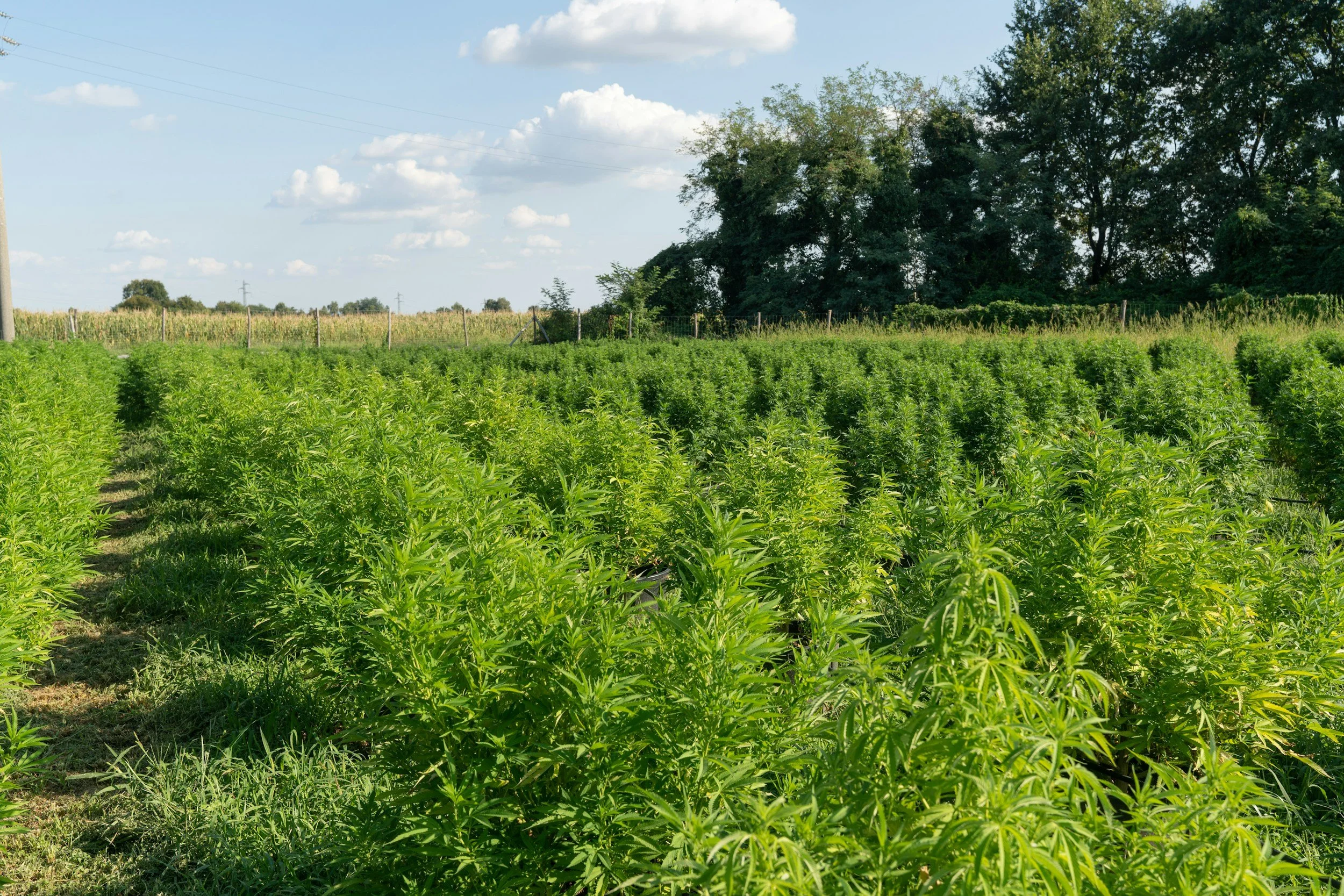
Industrial hemp cultivated for fiber, grain, seed, textiles, building materials, and other traditional agricultural uses generally remains unaffected by the new restrictions.
Isolates, Converted Cannabinoids, and Synthetic Cannabinoids
The federal amendments do more than impose new THC limits. They also narrow the types of cannabinoids that qualify as hemp.
According to ODAFF's January 16, 2026 Hemp Clarification Letter, the amended federal definition excludes cannabinoids that are not naturally produced by Cannabis sativa L. or that are synthesized or manufactured outside the plant. ODAFF specifically identifies delta-8 THC and similar isomer products as examples of products that will no longer qualify as hemp after November 12, 2026. As a result, many products that currently rely on chemical conversion, isomerization, or synthetic manufacturing processes, including delta-8 THC, delta-10 THC, THC-O acetate, THC-P, and similar products, may lose hemp status regardless of whether they otherwise satisfy THC concentration limits.
By contrast, non-intoxicating cannabinoid isolates such as CBD isolate may continue to qualify as hemp products if they satisfy applicable THC limits and are not otherwise excluded from the statutory definition.
Businesses should not assume that reformulating products with alternative intoxicating cannabinoids will preserve compliance under the new federal framework. The amendments appear specifically designed to eliminate the market for intoxicating hemp-derived cannabinoid products that previously relied on the 2018 Farm Bill's definition of hemp.
State-Licensed Cannabis Products
The federal hemp amendments do not directly regulate products sold through state-licensed medical or adult-use cannabis programs. However, those products remain subject to applicable state cannabis laws and continuing federal controlled-substance regulation. The amendments primarily affect products that previously relied upon the federal hemp definition to claim lawful status.
Oklahoma-Specific Picture
Oklahoma has not adopted a comprehensive standalone statutory ban on intoxicating hemp products comparable to some other states. OMMA regulates Oklahoma's medical marijuana program, while hemp remains primarily within ODAFF's regulatory framework.
As of mid-2026, many Oklahoma retailers have continued selling hemp-derived THC, delta-8 THC, THCA, HHC, and similar products in reliance on the existing federal hemp framework. That landscape is expected to change significantly when the federal amendments take effect on November 12, 2026.
On January 16, 2026, ODAFF issued a Hemp Clarification Letter outlining its interpretation of the amended federal definition of hemp. The letter confirms that any final marketplace hemp-derived cannabinoid product must contain no more than 0.4 milligrams of Total THC per container and reiterates that hemp products must remain below 0.3% Total THC on a dry-weight basis. Importantly, ODAFF also states that the amended definition excludes cannabinoids that are not naturally produced by Cannabis sativa L. or that are synthesized or manufactured outside the plant. The agency specifically identifies delta-8 THC and similar isomer products as examples of cannabinoid products that will no longer qualify as hemp after November 12, 2026.
As a result, Oklahoma businesses should not view the new law as merely a THC-limit change. ODAFF's guidance indicates that the amendments may affect not only THC concentration limits but also whether certain converted, synthesized, or chemically modified cannabinoids qualify as hemp at all. Businesses selling products containing delta-8 THC, delta-10 THC, HHC, THC-O, THC-P, or similar cannabinoids should carefully evaluate both the amended hemp definition and any separate federal controlled-substance considerations before November 12, 2026.
For Oklahoma retailers, manufacturers, distributors, and consumers, the practical impact is likely to be substantial. Many products currently sold through smoke shops, convenience stores, wellness retailers, grocery stores, and online platforms may no longer qualify as lawful hemp products after November 12, 2026.
ODAFF's guidance provides one of the clearest indications to date of how Oklahoma regulators intend to interpret and enforce the amended federal hemp definition. Businesses should begin reviewing inventory, supplier agreements, labeling, testing protocols, and product formulations now to prepare for the transition.
Practical Takeaway
The 2026 hemp amendments represent the most significant change to federal hemp regulation since passage of the 2018 Farm Bill. By imposing strict Total THC limitations, establishing a 0.4 milligram per-container cap for finished cannabinoid products, and narrowing the types of cannabinoids that qualify as hemp, the amendments will substantially restrict the market for intoxicating hemp-derived products beginning November 12, 2026.
Businesses that manufacture, distribute, or sell hemp-derived cannabinoid products should not assume that compliance can be achieved simply by lowering THC concentrations. Product formulations, cannabinoid sourcing, manufacturing methods, testing protocols, packaging, labeling, and marketing claims should all be reviewed in light of the amended definition of hemp and evolving federal and state guidance.
Retailers, processors, distributors, manufacturers, and brand owners should begin evaluating:
Current inventory and sell-through timelines;
Product testing and Total THC calculations;
Supplier representations, warranties, and indemnification provisions;Whether products can be reformulated to comply with the new thresholds;
Whether certain products remain eligible to be marketed as hemp at all;
Whether any products should be transitioned into state-licensed cannabis channels; and
Customer-facing advertising, labels, packaging, and website claims.
Businesses that wait until late 2026 to address these changes could face significant inventory, compliance, and operational challenges.
This memorandum is provided for informational purposes only and does not constitute legal advice. Receipt of this memorandum does not establish an attorney-client relationship. Clients should consult with counsel regarding the application of these developments to their specific circumstances.