
What Medical Marijuana Businesses Need to Know About New Edible Packaging Requirements
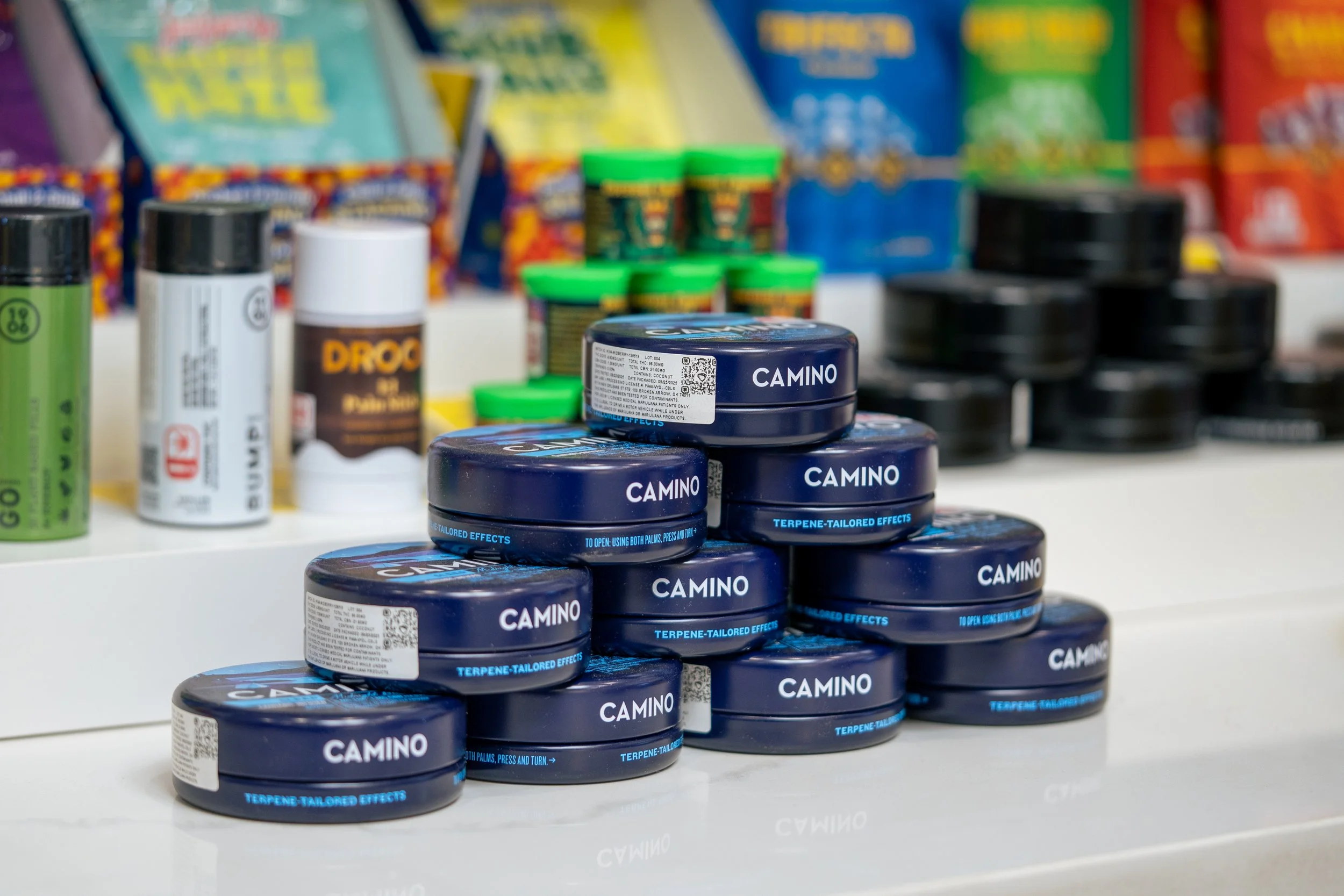
Oklahoma’s medical marijuana businesses have less than a month to prepare for new edible packaging and labeling requirements under House Bill 4454. Approved by Governor Kevin Stitt on May 7, 2026, the law takes effect November 1, bringing new restrictions on how edible medical marijuana products are labeled, designed and manufactured.
For processors, the changes raise practical questions about product design, packaging and inventory already in the supply chain. For dispensaries, one of the biggest concerns has been whether products currently on their shelves will have to be pulled when the new requirements take effect.
The Oklahoma Medical Marijuana Authority (OMMA) has now clarified how the transition will work. Its guidance answers an important question about existing inventory while reinforcing a distinction that businesses need to understand: the rules governing new transfers are different from those governing products already in a dispensary’s possession.
What Does HB 4454 Change?
HB 4454 amends Oklahoma’s medical marijuana processor statute to establish more specific requirements for edible medical marijuana products, including how serving information is displayed and how products are designed.
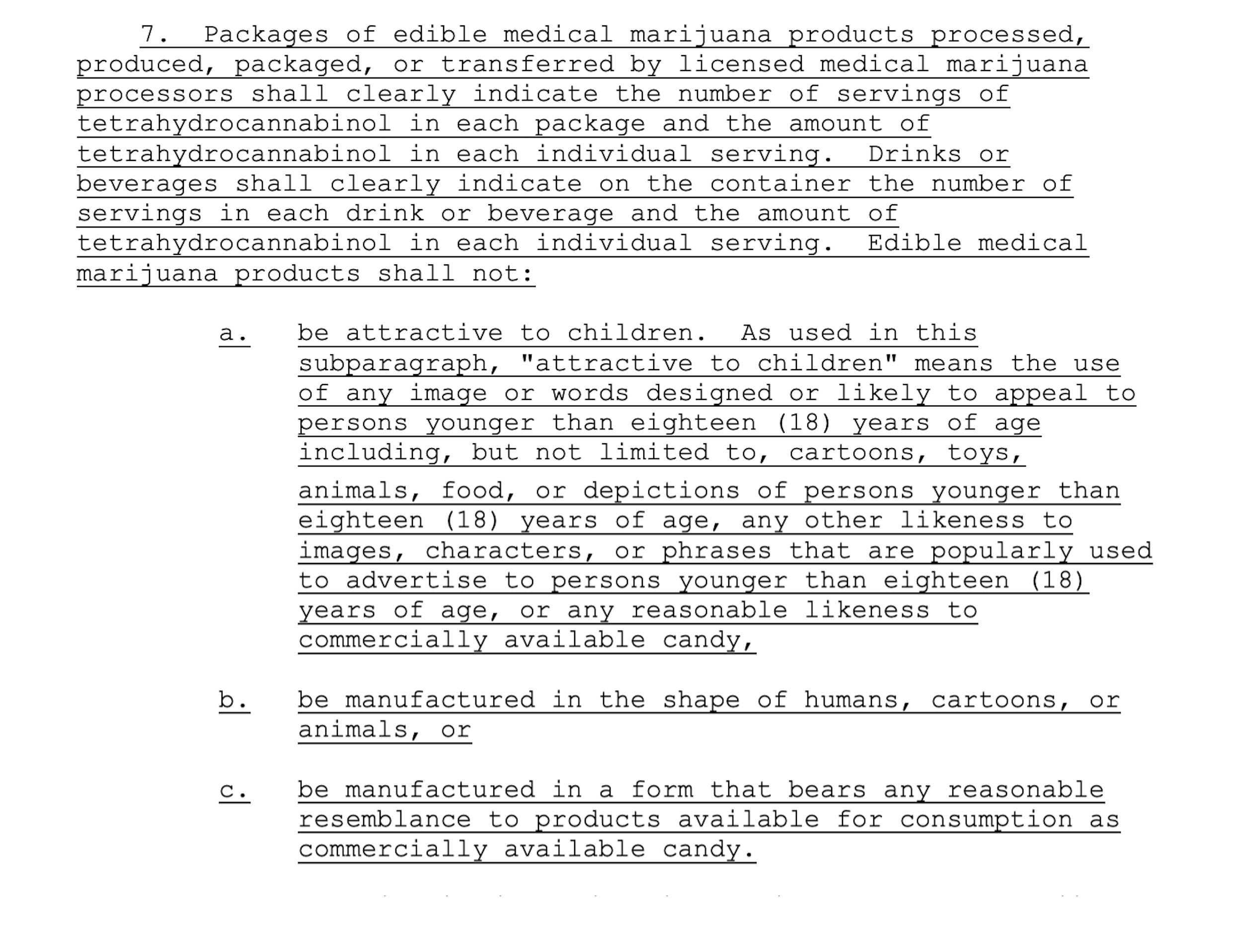
Under the new law, packages of edible medical marijuana products must clearly state the number of servings in each package and the amount of tetrahydrocannabinol (THC) in each individual serving. Drinks and beverages must display the number of servings in the container and the amount of THC in each serving.
The law also restricts product designs and forms that could appeal to children or resemble commercially available candy. Edibles may not use images or wording designed or likely to appeal to people under 18, including cartoons, toys, animals, depictions of minors and other imagery or phrases commonly used to market products to children. Products may not be manufactured in the shape of humans, cartoons or animals, or in forms that reasonably resemble commercially available candy.
These provisions make clear that compliance involves more than updating a label. They could affect an entire brand identity. Processors must consider the product itself, its shape, its presentation and the language and imagery used in its packaging.
For businesses with established product lines, that may mean reviewing existing designs and packaging before producing or transferring additional inventory. A product that has been sold in Oklahoma for years is not automatically exempt from the new requirements simply because its design was previously accepted in the market.
Do the New Requirements Apply to All Medical Marijuana Products?
One of the questions surrounding HB 4454 is whether the new restrictions apply to every medical marijuana product or specifically to edibles. This law is about edibles, including drinks and beverages.
The packaging and design provisions discussed here expressly address edible medical marijuana products, including drinks and beverages. The restrictions as written are on child-attractive imagery, animal or human shapes and resemblance to commercially available candy.
That said, businesses should not interpret the focus on edibles as permission to overlook other packaging and labeling obligations that already apply to all medical marijuana products. HB 4454's requirements operate alongside the broader statutory and regulatory framework governing Oklahoma's medical marijuana industry.
Can Dispensaries Continue Selling Existing Edible Inventory After November 1?
For dispensaries, the most immediate concern has been whether products already in inventory must be removed from shelves when the new law takes effect.
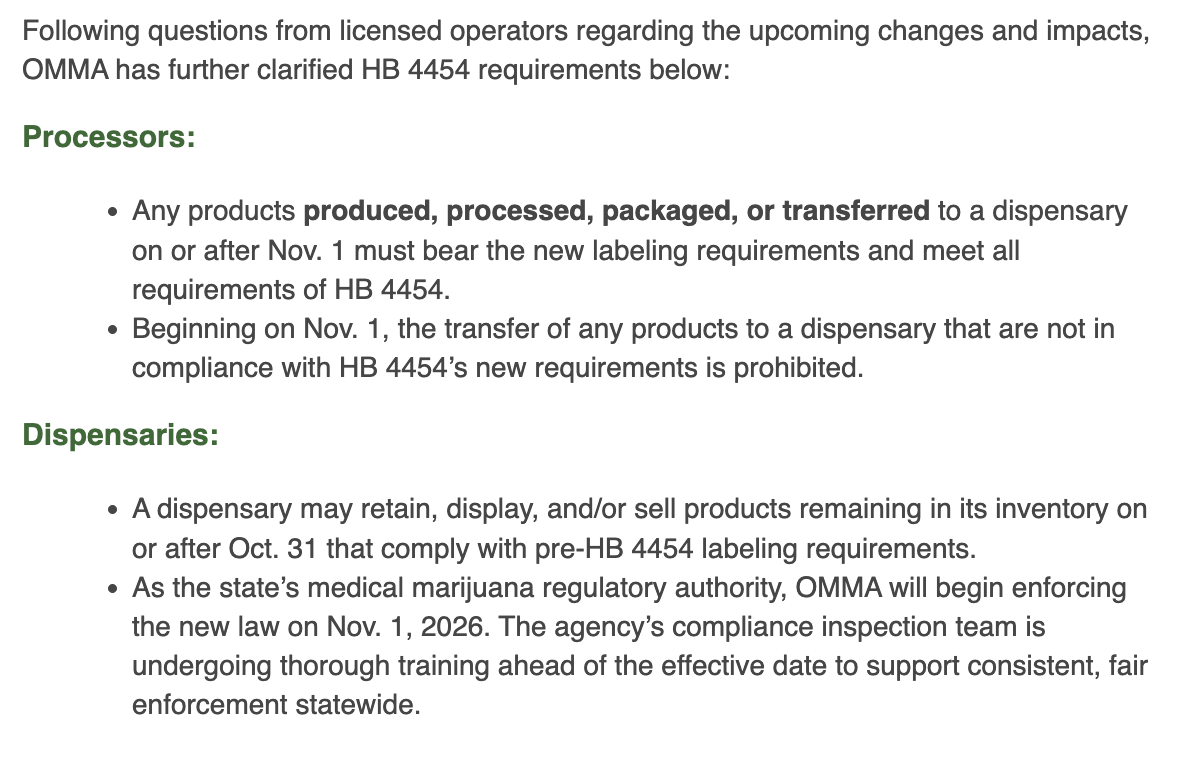
OMMA addressed that question directly in its October 12, 2026, clarification. According to the agency, dispensaries may retain, display and sell products remaining in their inventory on or after October 31 that comply with the labeling requirements in effect before HB 4454.
In practical terms, dispensaries do not have to discard or remove all existing edible inventory on November 1 simply because it does not meet the new requirements, provided that inventory falls within OMMA's stated allowance for products compliant with the prior labeling requirements.
The clarification explicitly allows dispensaries to continue selling existing inventory rather than requiring every product already on the shelf to be relabeled or withdrawn on the effective date.
What Changes for Processors on November 1?
The transition is more restrictive for processors supplying dispensaries.
OMMA has clarified that any products produced, processed, packaged or transferred to a dispensary on or after November 1 must carry the new labeling and satisfy all applicable requirements of HB 4454. Beginning that day, transferring noncompliant products to a dispensary is prohibited.
OMMA Will Begin Enforcement November 1
OMMA has confirmed that enforcement of HB 4454 will begin November 1, 2026. The agency also stated that its compliance inspection team is undergoing training ahead of the effective date to support consistent and fair enforcement statewide.
With the effective date approaching, the immediate priority is to understand which requirements apply to your products, review inventory and packaging before the effective date, and ensure that future transfers on or after November 1 comply with the updated law.
Businesses with questions about how HB 4454 applies to a particular product or inventory situation can schedule a consultation with our medical marijuana compliance attorneys. The attorneys at Gies Law Firm also provide on-site compliance audits to ensure everything on your shelf or in your facility is compliant before there’s a chance for it become an issue. Contact us today.
